Desk stand
A 3D-printed stand that holds PlancH at 20° on the desk. The board keeps its rubber feet and simply drops into a frame that follows its outline: no screws, no glue, and it lifts out with a finger through the notch at the front. Slots in the frame let the backlight LEDs shine out onto the desk.
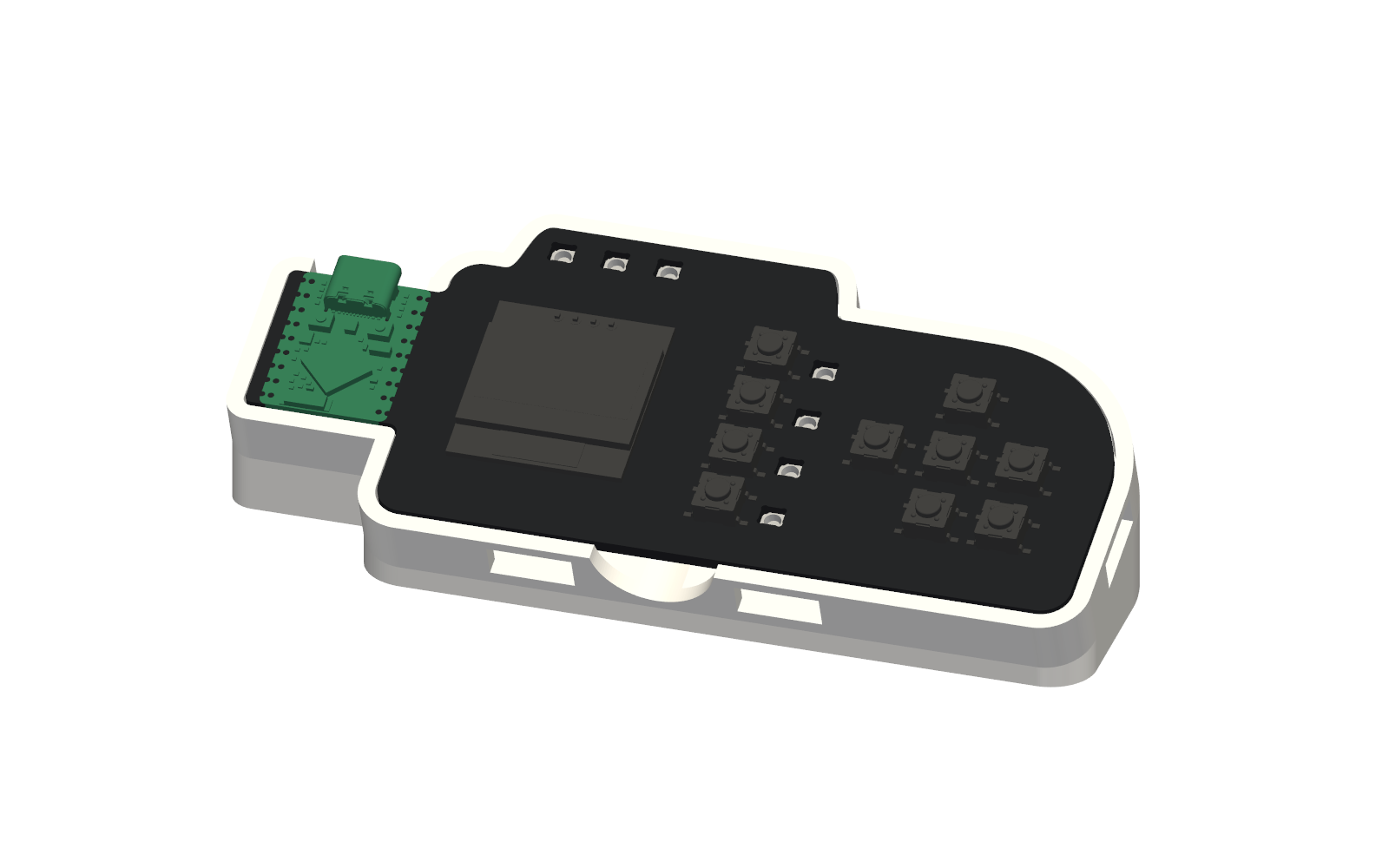
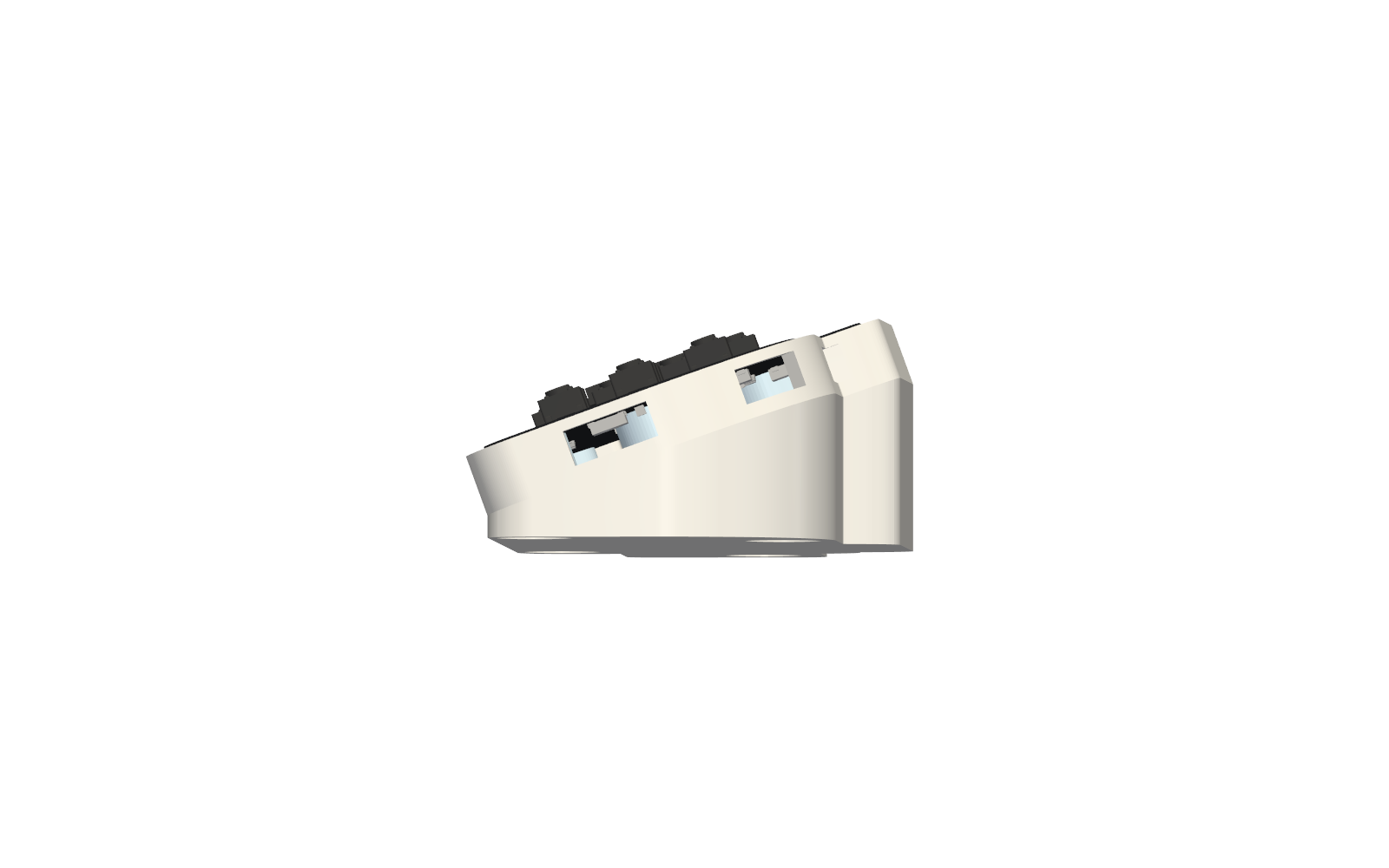
3D View
Inspect the stand design in 3D, on its own or with the board in place. With the board shown you can also switch on the LEDs, by group as in the firmware: the backlight shining on the desk is suggested by the glowing light slots.
LEDs:
Files
| File | Use |
|---|---|
planch-desk-stand.3mf |
Ready for Bambu Studio / PrusaSlicer, already oriented |
planch-desk-stand.stl |
Any slicer (GitHub shows it in 3D) |
planch-desk-stand.step |
CAD |
leggio.py |
Parametric source (build123d) |
Printing
- Material: PLA, about 35 g with 15% infill.
- Orientation: on its base, as in the 3MF. No supports needed.
- Colour: white or light PLA works best: the inside of the frame reflects the backlight through the slots.
- Tested on: Bambu Lab A1, 0.4 mm nozzle, 0.2 mm layers.
- Bumpers: four Ø 10 mm rubber bumpers go in the recesses underneath, so the stand does not slide when you press the buttons.
Design
| Parameter | Value |
|---|---|
| Tilt | 20° |
| Rubber feet height | 5 mm |
| Board thickness | 2.0 mm |
| Gap between board and frame | 0.3 mm per side |
| Walls / floor | 2.4 / 2.0 mm |
| Wall top | 0.5 mm below the top face of the board |
| Overall size | about 125 × 57 × 31 mm |
- The frame outline is read from the board STEP file, so it always follows the real PCB edge.
- Five light slots face the backlight LEDs D8–D12; D13 shines out of the USB-C opening.
- The USB-C opening leaves room for the plug and its overmould; the cable leaves from the top, behind the stand.
Adapting it
If your board is 1.6 mm thick, your feet are taller or your printer runs tight, regenerate the model with uv from the repository root:
cd mechanical/desk-stand
uv run --no-project --python 3.12 --with build123d python leggio.py \
    --board ../../production/planch.step --out . --pcb 1.6 --feet 5 --tilt 20
The script writes leggio.stl, leggio.3mf and leggio.step ("leggio" is Italian for
"stand").